


Mangrove Forestry

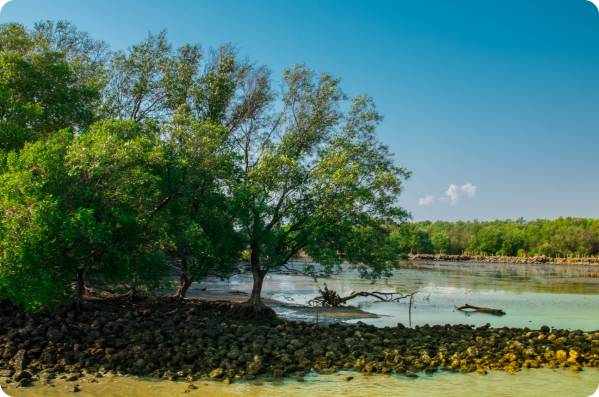
According to the US National Ocean Service, mangroves are “a group of trees and shrubs that live in  the coastal intertidal zone”.

Benefits of Mangroves

Mangroves support the livelihoods and well-being of hundreds of  millions of coastal inhabitants around the world, provide food security, sequester and store large quantities of carbon, regulate water quality, and protect the coast.

Current Challenges

However, during the last five decades, 20-35% of our mangroves have disappeared. In many parts of the world, mangroves have been converted into fishponds and agricultural areas2  or have been removed to make way for urban sprawl and coastal development. Remaining  mangroves are under threat of degradation from unsustainable exploitation for timber and fuelwood or from infrastructure developments that alter the nutrient, sediment, and water supplies that mangroves depend upon.  In some cases, ground water extraction has caused entire coastal areas to sink, resulting in mangrove loss and coastal erosion. Mangrove degradation and loss has altered the structure and function of valuable coastlines, weakening the ecosystem services mangroves provide and releasing carbon back to the atmosphere in the process.

Restoration Efforts

The good news is, in recent years, many innovative and successful restoration guidance documents and tools have emerged that advocate for more effective approaches to restoration. Specifically, the most successful way to restore mangroves is to create the right biophysical conditions for mangroves to grow back naturally and the right socioeconomic conditions to incentivize their long-term protection.

Climate Ethos
Framework

Climate Ethos is developing frame works with many related stake holders to evolve a master framework with best practice guidelines for mangrove restoration and how to practically achieve climate change targets beyond physical restoration activities, pushing the boundaries.

Besides bringing in stake holders with wealth of experience, we need to implement  factors that can make or break restoration project.

Developing specific and achievable goals and objectives

Assessing site feasibility

Project design

Stakeholder engagement

Implementation planning

Monitoring and adaptive management